choosing, pricing, and installing cemetery grave markers and monuments
Buried in spring, stone set in fall? Where the months actually go
The gap between a burial and a finished monument is rarely one delay; it is six or seven small ones stacked end to end, and several can be run in parallel.
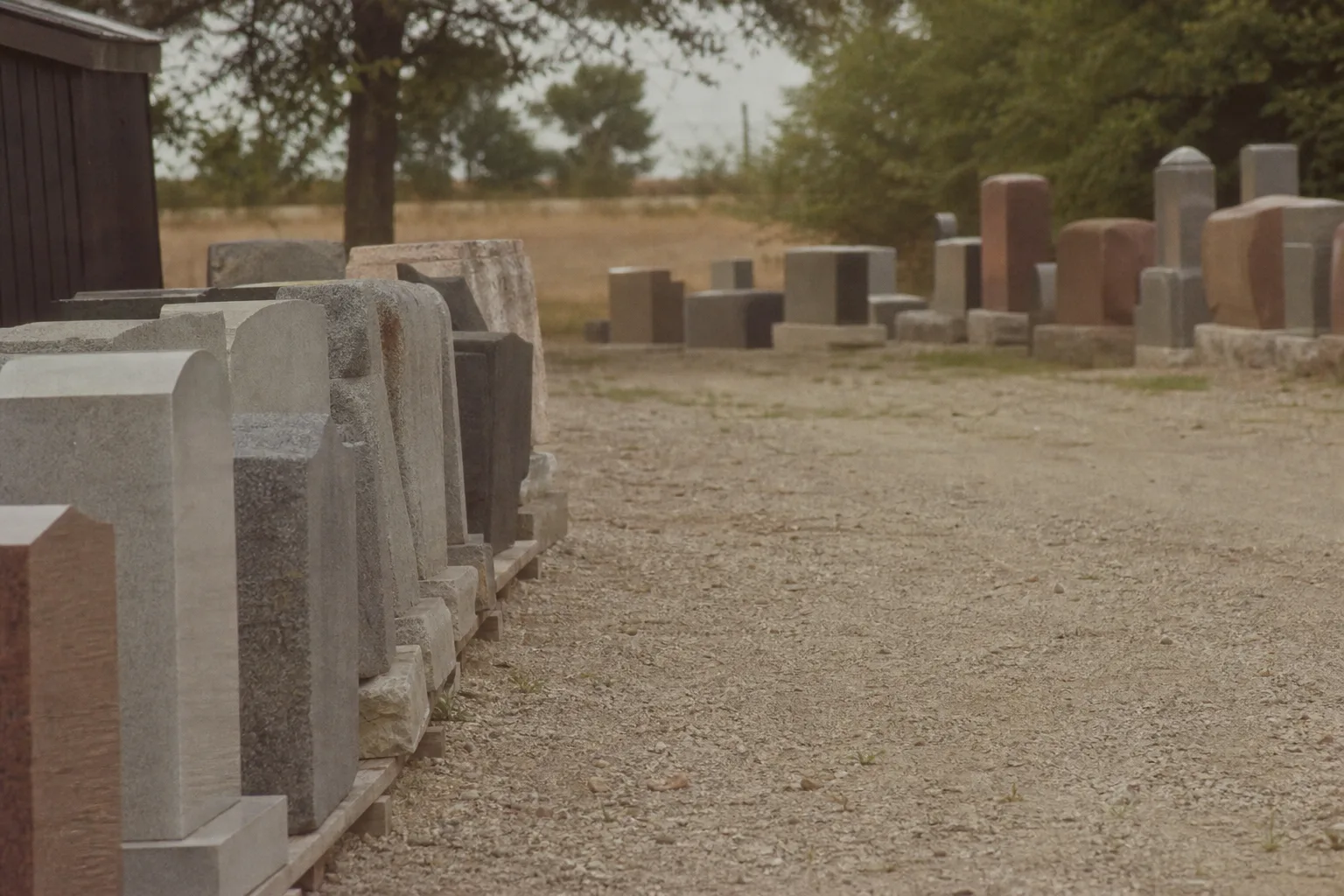
Design, approval, ordering, and carving can all proceed while the ground settles. Families who wait for settling to finish before calling a dealer effectively add the production schedule on top of the waiting schedule.
Families are often told the stone will take a few months, and then discover that the few months have become nine, with no single person to blame. Nothing went wrong. The sequence simply has more steps than anyone described at the funeral home, and most of them are held by different parties: the cemetery, the dealer, the quarry, the carver, the foundation crew, and the weather. Understanding which of those steps run one after another, and which can be run at the same time, is the difference between a marker set before the first anniversary and one set after the second.
The settling period is real, but it is not always yours to wait out
After interment, most cemeteries require a settling period before any foundation is poured over or beside a grave. The excavated soil compacts unevenly as it takes on water, and a foundation poured too early can tip, sink at one corner, or open a seam that later admits frost. Requirements vary widely by cemetery and by soil: some grounds require several months, some require a full year, and some in sandy or heavily engineered sections require considerably less. This is the single largest block of time in the sequence, and it is also the one that costs nothing to spend, because almost everything else can happen inside it.
The mistake that costs money is treating the settling period as a reason to do nothing. Design, approval, ordering, and carving can all proceed while the ground rests. Families who wait until the settling period ends before making a first phone call have effectively added the production schedule to the waiting schedule rather than overlapping them, and production is where the calendar tightens fastest.
The permit is a document, and the cemetery is the author
Almost every cemetery requires written approval before a monument is installed, usually in the form of a permit or work order issued to the dealer rather than to the family. The application typically carries a drawing to scale, the exact inscription, the finished dimensions, the foundation specification, and the lot and grave identification. Cemeteries commonly charge a fee for this, separate from anything the dealer bills, and the fee is frequently a percentage of the monument price or a flat installation charge that covers the grounds crew's supervision. Ask for that number in writing early. It is the most reliably forgotten line in the total.
Review is not instant. Many cemeteries process applications on a set schedule, weekly in larger grounds and monthly in smaller church or municipal ones, and a rejected drawing goes back to the start of that cycle. Rejections are usually small: a base an inch too wide, a finish the section does not allow, a vase that is prohibited. Each round trip costs two to six weeks, which is why experienced dealers submit conservative drawings.
Ordering, carving, and the cost of changing your mind
Once the drawing is approved, the dealer places the order. If the granite is a stock color in a stock size, the block may already be in a distributor's yard and the lead time is essentially the carving queue. If the color is unusual, the size is oversized, or the piece is shaped rather than rectangular, the wait includes quarry availability and freight, and that can add months on its own. Carving itself, the sandblasting and the hand detail, is measured in days of work but sits in a shop queue measured in weeks.
The expensive moment is the proof. A dealer will send a layout showing the inscription, the lettering style, the dates, and any etching for signature before anything is cut. Read it with a second person present and check spellings, middle initials, and dates against a document rather than memory. Approving a proof is the point at which the design of a headstone stops being reversible, because a corrected stone after blasting is a new stone at close to full price. Changes before the proof is signed typically cost nothing but a few days.
Foundation, setting, and the seasons that close the door
The foundation is usually poured by the cemetery's own crew or by an approved contractor, to a depth the cemetery specifies rather than the dealer prefers. In northern grounds, the pour has to go below the frost line, and that alone determines the season: once the ground freezes, most cemeteries stop pouring until spring, and a monument finished in November may sit in a shop until April. Concrete also cures before weight goes on it, typically a matter of days rather than weeks. Then the setting itself, a crane or tripod, two or three people, and an hour or two of careful work.
The costs that catch families here are the ones tied to timing rather than the stone. Storage fees if a finished monument waits in a dealer's yard past a stated window, a second mobilization charge if a crew arrives and the ground is unready, and rush fees if the family wants the piece set before a specific date. The Federal Trade Commission oversees pricing disclosure in funeral goods and services, and the plainest use of that principle here is to ask each dealer for a written schedule alongside the written price, naming who pours, who sets, who pays the cemetery, and what happens if winter arrives first.
A family that starts the design conversation within a month or two of the burial, submits early, and reads the proof carefully is usually setting a stone at the end of the settling period rather than beginning the process there. That single decision, made in the first weeks, is worth more calendar time than any expedite fee will buy later.
- Cemetery fees are separate Grounds fees for foundation work and installation supervision are billed by the cemetery, not the dealer, and are frequently omitted from a monument quote. Request that figure in writing before signing anything.
- Approval cycles Larger cemeteries review monument applications weekly; smaller church and municipal grounds may review monthly. A drawing rejected over a half-inch dimension goes back to the start of that cycle.
- Stock versus special order Common granite colors in standard sizes often sit in a distributor's yard and ship quickly. Unusual colors, oversized blocks, and shaped pieces depend on quarry availability and can add months before carving even starts.
Common questions
The proof is the deadline
The layout proof shows every letter, date, and ornament before anything is cut. Once it is signed and the stone is blasted, corrections generally mean a replacement stone at close to full price.
Verify dates from documents
Check names, middle initials, and dates on the proof against a death certificate or obituary rather than from memory. Errors in a middle name or a birth year are the most common and most expensive to fix.
Frost line governs the pour
In cold regions the foundation must extend below the frost line, and cemeteries typically suspend pouring once the ground freezes. A monument finished late in the year may wait in storage until spring.
| Timing-related charges | Storage fees, second trip charges when a crew arrives to unready ground, and rush fees for a specific date are all tied to scheduling rather than the stone itself. Ask each dealer how those are triggered and what they cost. |
| Settling period ranges | Cemeteries commonly require anywhere from a few months to a full year of ground settling before a foundation may be poured. The exact requirement depends on soil type, burial depth, and whether the grave uses a concrete vault. |
| Overlap, don't stack | Design, approval, ordering, and carving can all proceed while the ground settles. Families who wait for settling to finish before calling a dealer effectively add the production schedule on top of the waiting schedule. |
- Who holds the permit
- Most cemetery installation permits are issued to the monument dealer, not the family, which means the family rarely sees the document. Ask for a copy anyway, since it records the approved dimensions and inscription.
- Cemetery fees are separate
- Grounds fees for foundation work and installation supervision are billed by the cemetery, not the dealer, and are frequently omitted from a monument quote. Request that figure in writing before signing anything.
- Approval cycles
- Larger cemeteries review monument applications weekly; smaller church and municipal grounds may review monthly. A drawing rejected over a half-inch dimension goes back to the start of that cycle.