Before you sign a monument estimate, seven lines worth checking twice
A line-by-line reading of a granite dealer's estimate, from stone and carving to foundation, permit, sales tax, and the second date nobody prices in advance.
choosing, pricing, and installing cemetery grave markers and monuments
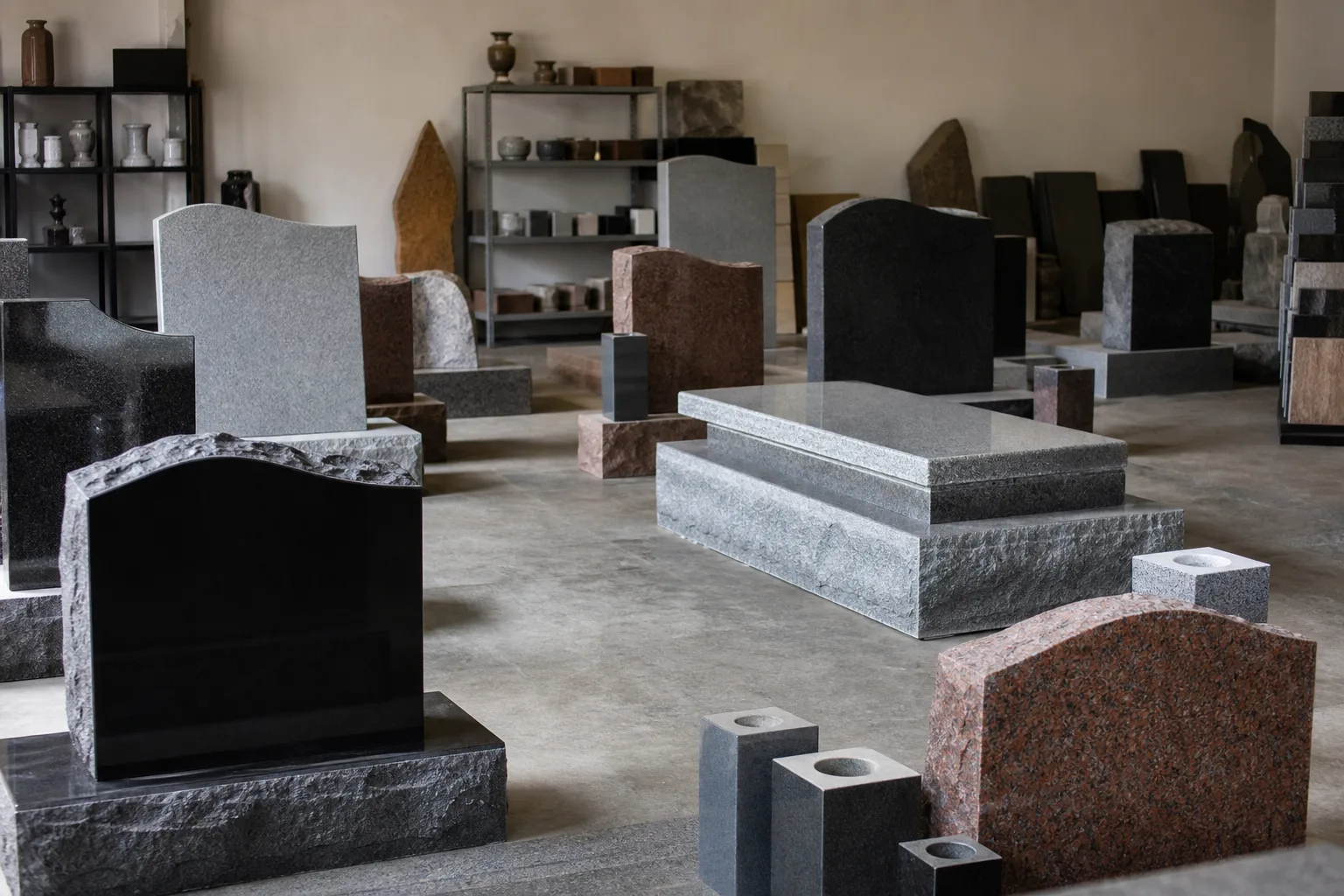
A monument is usually two pieces of granite, the upright die and the base beneath it. Confirm whether the quoted price covers both, because a base sold separately can add several hundred dollars.
A monument estimate usually runs to less than a page, and the total at the bottom is the part everyone reads. The lines above it are where the real agreement lives, because they decide what arrives at the cemetery, who pays for the concrete under it, and what a family will be quoted years later when the stone has to come up for a second date. Dealers differ in how much they itemize. A careful reader asks for the breakdown in writing before the deposit, not after, and compares three estimates on the same terms.
1. The stone itself, described precisely enough to compare
The first line is granite, and granite is not one thing. A quote should name the color and quarry designation, the finished dimensions in inches, and whether the price covers a die alone or a die and base together. Polish is separately described: all-polish, two-polish with steeled sides, or polished front only. Two estimates a thousand dollars apart often turn out to describe different depths of stone, a four-inch die against a six-inch, or a base that is shorter than the marker it carries. Ask for dimensions on both pieces before comparing anything.
2. Carving, and how much of it is included
Standard lettering, meaning names and dates in a sandblasted block or roman face, is normally bundled into the stone price up to a stated number of characters. Everything past that is priced separately: a scene carved into the panel, a laser etching, a shaped rose, a religious emblem, a raised or hand-carved letter. Some shops charge per character past the allowance, others by the panel. The estimate should say which. It should also record the exact spelling and dates the shop will cut, since the family, not the dealer, typically owns that proof.
3. Foundation, which is often not the dealer's line at all
Below the marker sits a poured concrete foundation, and the cemetery frequently reserves that work for itself and bills the family directly. When it does, the dealer's estimate may show nothing, or a placeholder the salesperson has not confirmed. Foundation pricing usually runs by the square foot or the linear inch of base, so a wider base costs more underneath as well as above. A reader who asks the cemetery office for its current foundation rate, in writing, learns the number the estimate left out.
4. Setting, delivery, and who carries the stone
Setting is the labor of transporting the finished monument, placing it on the foundation, leveling it, and sealing the joint. Some dealers fold it into the stone price within a certain radius and charge mileage past that. Others quote it as its own line, and a few cemeteries require that their own crew set anything heavier than a flat marker, which means paying two parties. Winter matters here: many grounds suspend foundation pours during frost, so a spring installation date belongs in the contract.
5. Permits, sales tax, and the small mandatory items
Cemeteries commonly charge a permit, inspection, or right-of-installation fee before a stone may enter the grounds, and it is the family's cost whether or not the dealer collected it. State sales tax generally applies to a monument as tangible personal property, and it is applied to the full contract, not the deposit. The Federal Trade Commission oversees how funeral goods and services are priced and disclosed to consumers, and the same instinct serves well here: ask for every mandatory charge listed separately, with the tax shown as its own figure.
6. Vases, and the hardware that gets forgotten
A granite or bronze vase is almost always an add-on, and its price should include the drilling or coring of the stone, the threaded insert, and the vase itself. Bronze plates, ceramic photographs, and flower rings work the same way. Cemeteries also regulate them, restricting vase height, requiring flush-mount hardware, or barring permanent vases in mowed lawn sections altogether. Checking the rule before ordering the part is far cheaper than shipping it back.
7. The second date, priced years from now
On a companion monument, one date panel stays blank. Adding it later means a cemetery visit, a portable sandblast setup or, in some cases, lifting the die off the base and returning it to the shop. That work is quoted at the labor rates in effect at the time, plus a new permit if the cemetery requires one. Some dealers will name a price now and hold it in the file. Asking costs nothing, and the answer is worth having on paper.
The strongest version of this process is unglamorous: three itemized estimates, one call to the cemetery office, and every included item named in the contract before money changes hands. Families who do that generally get the stone they pictured, on the schedule they were told, at the number they agreed to.
Polish counts as a spec
All-polish, two-polish, and polished-front-only are three different prices on the same block of granite. Comparing quotes without matching the polish specification compares nothing useful.Character allowance on lettering
Most estimates include a set number of sandblasted characters in the stone price. Long names, middle names, and an inscription line can push a family past the allowance and into a per-character charge.Proof approval in writing
The dealer will produce a layout drawing showing exact spelling, dates, and placement before cutting. Once a family signs it, corrections to granite are generally at the family's expense.- Foundation billed by the cemetery
- Many cemeteries pour their own foundations and invoice the family directly, which is why the line is missing from some dealer estimates. Call the office and get the current square-foot or per-inch rate.
- Frost stops the pour
- Grounds in cold climates typically suspend foundation work from late fall until the ground thaws. A stone finished in December may not be set until April, and the contract should say so.
- Setting fee and mileage
- Setting covers hauling, placing, leveling, and sealing the monument on its foundation. Dealers often include it within a set radius of the shop and add a mileage charge beyond it.